Separate the work
Keep each discipline’s work in focused projects with the tools and context it requires.
Struct connects engineering work across independently owned spaces and projects, with scoped access, linked evidence, reviews, and decisions built into the workflow.

Scoped engineering collaboration
Start with user or organization projects. Use spaces for team, program, client, or confidentiality boundaries. Link the authorized work a review needs.
Keep each discipline’s work in focused projects with the tools and context it requires.
Link authorized items across projects and keep the source context visible.
Anchor review threads to the work and preserve accepted states in saved versions.
PROGRAMAURELIA R1 integration3 reviewersOne focused review
Start with the relevant system view, open its supporting evidence, run selected checks, and preserve the decision with the work.
Draw or import the relevant system view and connect the items under review.
Reference a diagram, node, connector, requirement, or decision. Struct creates the backlink.
Share a review link, keep comments anchored to the work, and preserve the accepted state in a version.
Linked specifications
Link the requirement, source revision, comment, and accepted decision to the exact connector under review.
Controller J4 requires an 8-position connector. The review links @{Harness and cable topology} and Harness Rev B.
Decision: update the harness connector before the next build and preserve both source revisions with the review.
What ships with the workspace
Struct agent
It can compare linked project evidence, report selected conditions, and prepare a draft for an engineer to approve.
Private by design
Keep browser-local work private or share selected project evidence through an organization. Export browser-local backups regularly.
Embedded systems + PCB CAD
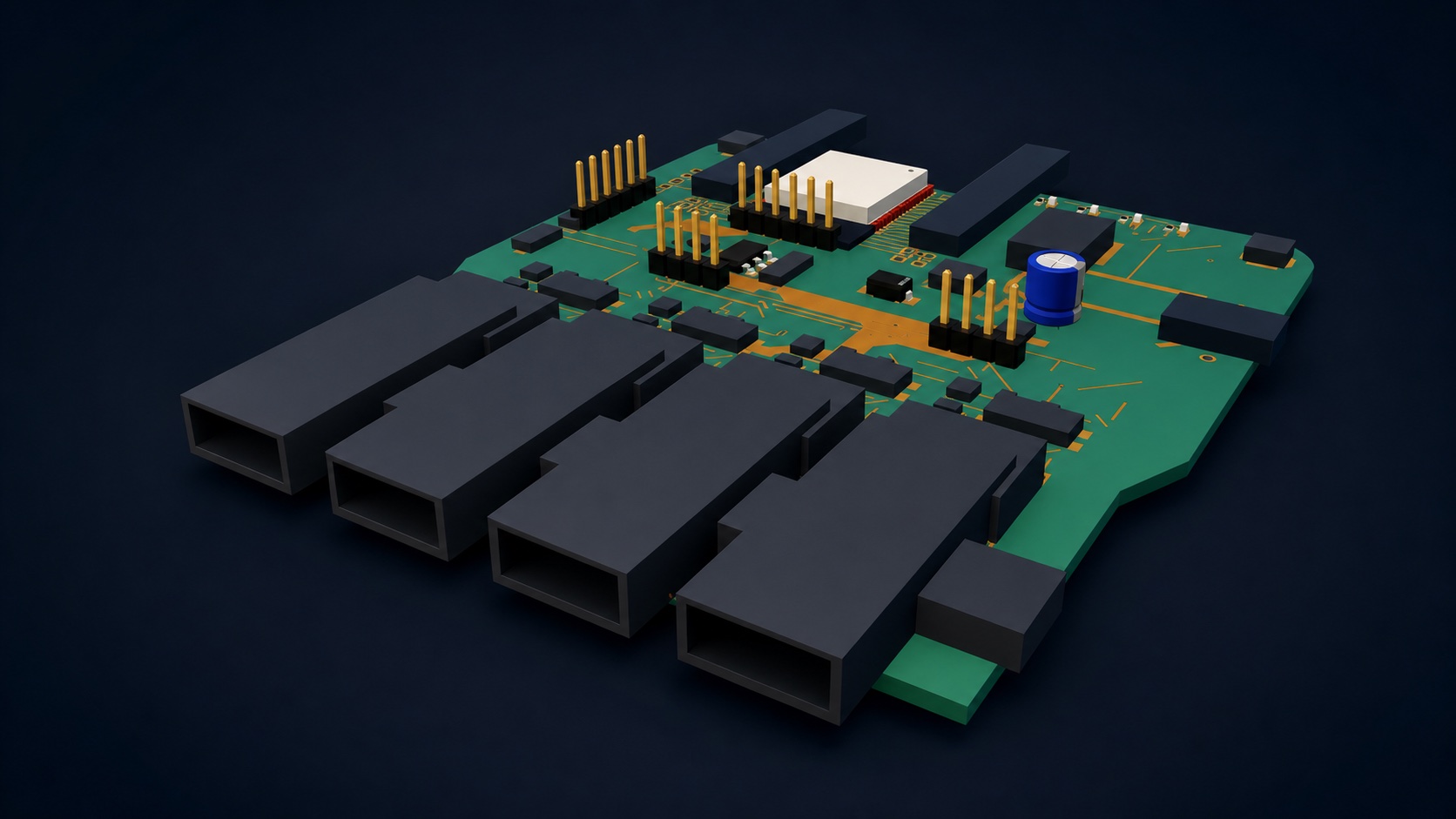
Build microcontroller systems from exact parts and firmware interfaces. Then place footprints, cross-probe, route copper, run DRC, and inspect the board in 3D.
Open interchange
Import Mermaid, PlantUML, images, supported KiCad libraries, or Struct projects. Export diagrams, documents, editable project data, and generated PCB review packages.
Checks that match the work
Report architecture conditions, schematic ERC, PCB DRC, sourcing signals, and harness release checks from the project.
Each discipline keeps its language
Bring software, cloud, electrical, mechanical, and other engineering evidence into the same review without flattening the source work.
 Pod
Pod Service
 Ingress
Visual and versionable
Draw the interface, import the source, or edit its supported text representation. The review stays connected to the evidence.
1flowchart TD
2harness["Harness J4 · Rev B"]
3
4controller["Controller J4 · Rev C"]
5
6decision["Update harness"]
7
8harness -- "6-pin" --> controller
9controller -- "requires 8" --> decisionPrivate local collaboration preview
The planned desktop workflow sends project updates directly between verified peers on the same network, without a cloud relay.
Simple pricing
Solo is a complete professional workspace, not a limited demo. Add seats when the diagram becomes a living team record, then add governance when the organization requires it.
Compare every feature →All eight disciplines, linked specifications, discipline-specific tools, private offline projects, imports, and exports.
Try Struct →Live diagrams and specs, roles, restricted projects, versions, review links, and 50 daily agent prompts.
Explore Team →OpenID Connect SSO, verified domains, retention, audit history, and priority rollout support.
Explore Business →Team and Business require two seats. Monthly billing is available. See pricing details and Enterprise options.
Questions, answered
Start in private offline mode or create an organization when the work becomes shared.
Yes. Create a hobby organization for synchronized projects or choose private offline mode without an account.
Signed-in projects sync to the selected organization. Private offline projects stay in the current browser profile. Export browser-local backups regularly because browser storage can be cleared.
Organizations manage seats, roles, project access, versions, review links, retention, and audit history. Changes sync live and conflicting writes are rejected for retry.
Yes. Business and Enterprise can require OpenID Connect SSO. Password accounts use deployment-configured second-factor protection: Google Identity Platform supports trusted-phone verification, while the built-in provider supports authenticator codes and one-time recovery codes.
Struct supports Mermaid flowcharts, class diagrams, sequence diagrams, state diagrams, and entity-relationship diagrams, with export back to Mermaid where the format can preserve the model.
Yes. Keep embedded-system architecture, firmware interfaces, editable schematics, PCB layout, 3D board review, manufacturing setup, and files in one project. The CAD editor includes schematic-to-PCB sync, cross-probing, ERC, DRC, routing, exact-part evidence, and supplier search.
It can edit the current project, update linked specifications, prepare deliverables, and run selected project checks. Agent output is a draft and requires human approval. Paid beta access uses fair-use limits while usage is evaluated.
After the first load, browser-local projects can open offline. Export backups regularly because browser storage can be cleared. Desktop peer collaboration is a preview and is not currently distributed.
Pre-build system review